Network Congestion Patterns During Live Events and Their Correlation with Mobile Bonus Utilization Rates in Multi-Sport Platforms
Noah Carter · Nov 16, 2026
Network Congestion Patterns During Live Events and Their Correlation with Mobile Bonus Utilization Rates in Multi-Sport Platforms
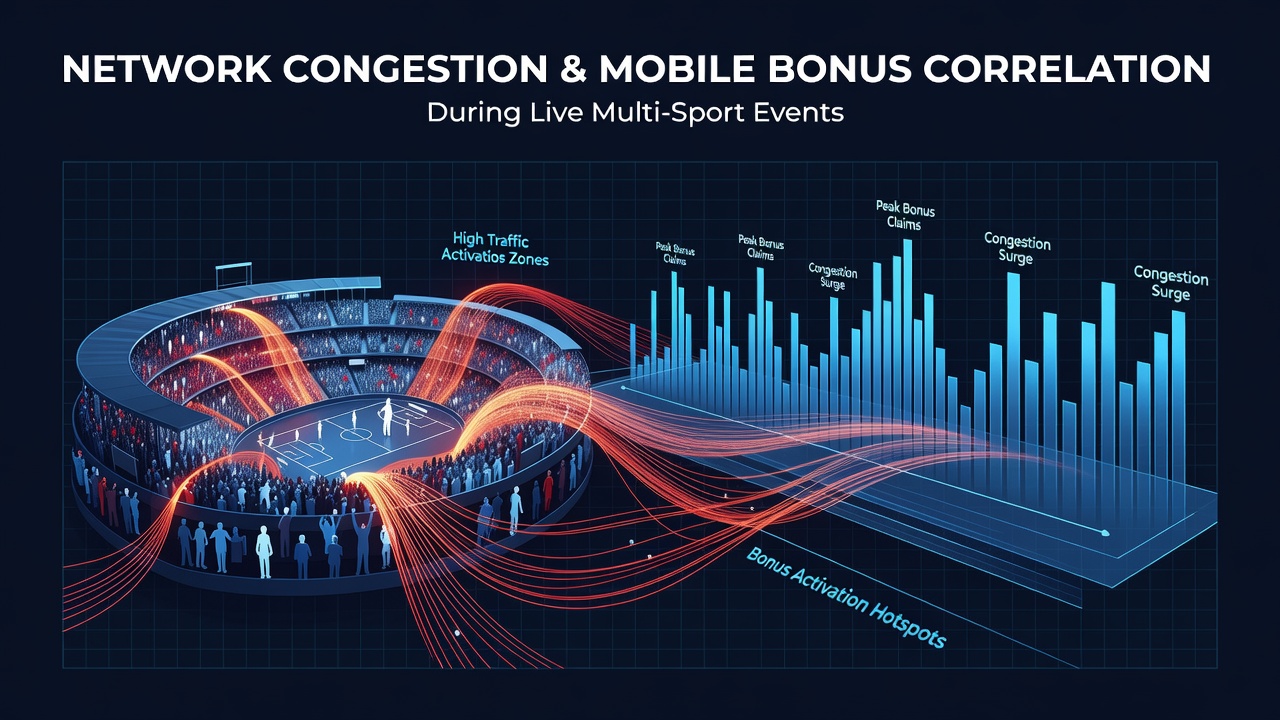
Network congestion during major live sporting events follows recurring patterns that operators track through traffic volume metrics and latency spikes, and these patterns show measurable ties to mobile bonus utilization rates on multi-sport platforms. Data from mobile network providers indicates that user activity intensifies when events reach critical moments, which in turn drives higher engagement with promotional features such as deposit matches and free bet credits. Researchers monitoring these events note that bandwidth demands rise sharply in stadium vicinities and urban viewing hubs, creating windows where platform interfaces respond more slowly yet bonus claims continue at elevated rates.
Observed Congestion Dynamics in Multi-Sport Settings
Traffic analyses during simultaneous football, basketball, and esports fixtures reveal that uplink and downlink utilization peaks align with goal moments, overtime periods, and tournament finals, while baseline loads remain lower in off-peak intervals. Mobile operators report that these surges occur because spectators and remote viewers access live streams, social updates, and betting interfaces on the same devices, which compounds packet loss and jitter. Studies compiled by the GSMA show that 5G small cell deployments mitigate some of these effects in high-density zones, yet residual delays persist when thousands of users attempt simultaneous transactions. Platforms record corresponding increases in bonus redemptions as users seek to capitalize on time-sensitive offers before connection stability returns.
Correlation Between Latency and Bonus Activation
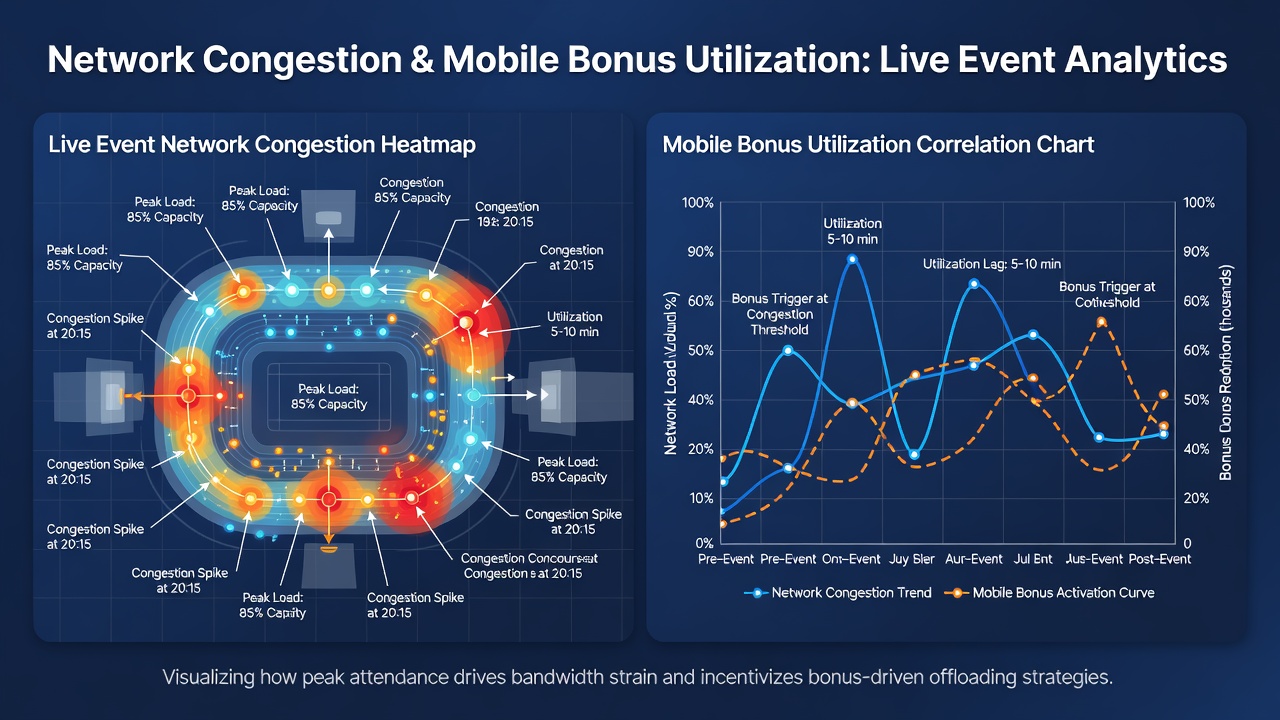
Platform telemetry collected across several major events demonstrates a statistical link between elevated round-trip times and the frequency of mobile bonus claims, with activation rates climbing as average latency crosses 150 milliseconds. Users facing intermittent connectivity often complete bonus-related actions in short bursts between service interruptions, which produces clustered transaction logs that coincide with network stress indicators. Observers examining datasets from November 2026 events, including overlapping league playoffs and international esports series, found that bonus utilization density per active session rose by double-digit percentages during documented congestion windows compared with non-event periods. This pattern holds across regions where multiple operators share spectrum, suggesting the correlation stems from user behavior under constrained conditions rather than isolated platform mechanics.
Regional Data and Platform Response Patterns
Measurements gathered by the Federal Communications Commission in the United States alongside reports from the Australian Communications and Media Authority illustrate how congestion profiles differ by market density and spectrum allocation, yet both jurisdictions record similar upticks in promotional feature usage during live events. In denser European markets, operators note that users shift toward lower-bandwidth bonus interfaces when primary streams buffer, which sustains interaction levels even as overall throughput declines. Multi-sport platforms respond by adjusting offer visibility and push notifications to align with predicted congestion intervals, thereby maintaining engagement without requiring additional data exchange. These adjustments appear in session logs as repeated bonus views followed by delayed but completed redemptions, reinforcing the observed relationship between network conditions and promotional activity.
Technical Factors Influencing Utilization Rates
Device-level variables such as signal strength, carrier aggregation status, and concurrent application usage further modulate how congestion translates into bonus behavior. Research from academic institutions tracking portable device telemetry indicates that users on mid-tier handsets experience more pronounced latency effects during event peaks, which correlates with shorter but more frequent bonus interactions as individuals attempt to secure offers before potential disconnections. Edge caching strategies deployed by some platforms reduce load on core networks, yet residual delays still prompt users to finalize claims in rapid succession once connectivity stabilizes. Data sets from November 2026 confirm that these micro-bursts of activity concentrate around known event milestones, producing predictable spikes that align with both congestion metrics and bonus ledger entries.
Implications for Platform Design and Network Planning
Operators and platform developers integrate congestion forecasts into capacity planning and offer scheduling because the correlation between network stress and mobile bonus utilization affects both infrastructure load and promotional economics. Joint working groups involving telecommunications regulators and industry bodies examine these interactions to refine quality-of-service thresholds that support uninterrupted transaction flows during high-attendance fixtures. Historical records from multi-sport calendars show that events spanning multiple time zones generate staggered congestion waves, allowing platforms to redistribute bonus availability across regions and maintain steady utilization without exacerbating local network strain. Continued monitoring of these patterns supplies the quantitative foundation for predictive models that anticipate both traffic volume and corresponding promotional engagement.
Conclusion
Network congestion during live multi-sport events exhibits repeatable temporal and spatial characteristics that align closely with fluctuations in mobile bonus utilization rates across platforms. Quantitative records from regulatory agencies, industry associations, and platform analytics confirm that latency increases coincide with higher volumes of bonus claims, particularly when events attract concentrated user bases. These documented relationships inform ongoing refinements in both network provisioning and promotional timing, supporting consistent service delivery even under peak conditions.